
What is a cataract?
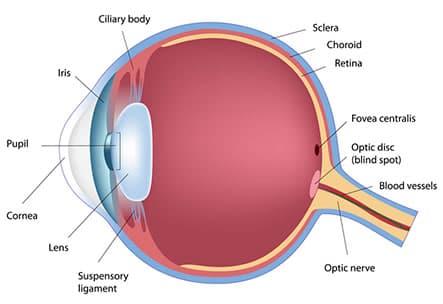
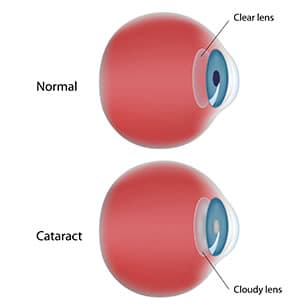
The lens of the human eye works like the lens of a camera. Located near the front of the eye, it focuses light onto the retina at the back to produce a sharp image. When the lens becomes cloudy, light can’t pass through properly and vision becomes blurred — this is a cataract.
How do they occur?
Cataracts are usually a natural part of ageing. They can also exist at birth, be caused by injury, or by conditions such as diabetes. They usually develop in both eyes, although not always at the same rate.
How do they affect you?
Cataracts often take years to develop and may not cause problems early on. As they progress, you’ll notice blurring of vision — driving and reading become more difficult, and your eyes may become more sensitive to light and glare.
How are cataracts treated?
Because a cataract is a clouding of the lens itself — not a film over it — surgery is the only way to remove it. The operation makes a tiny 3 mm opening in the front of the eye, gently breaks the cataract into small pieces (phacoemulsification), and replaces the cloudy lens with a small clear intraocular lens (IOL).
The whole operation takes around half an hour, and is done on one eye at a time so you can use the other eye while the operated eye heals. Most patients choose local anaesthetic — numbing around the eye so the operation is painless — though a general anaesthetic is available if you’d prefer to be asleep. Your surgeon will discuss what’s best for you. Laser-assisted cataract surgery is available at an additional cost not covered by health insurance.
Cataract surgery is very successful — there’s a greater than 95% chance of greatly improved vision. As with any operation there is a small risk of complications such as infection or bleeding, but these are very rare.
Your vision correction options
Our aim is to optimise your vision using refractive cataract surgery techniques and premium intraocular lenses. Your surgeon will help you choose the option that fits your eyes and your lifestyle:
1Monofocal vision
The most common option, with the least risk of side effects. Your vision is corrected for distance (most commonly), with glasses for reading.
Most chosen2Blended vision
One eye corrected for distance, the other for near. Your brain blends the two — most people don’t need glasses for everyday activities. You can trial it with contact lenses first.
Glasses-free for most tasks3Multifocal lenses
Designed for clear distance and near vision without glasses — about 4 in 5 patients don’t need glasses afterwards. Some notice glare or haloes around lights at first; this usually settles. Additional cost applies.
Premium option4Astigmatism correction
If your cornea is shaped more like a rugby ball than a soccer ball, a Toric lens or corneal incisions can correct it during the same surgery.
Toric lensAfter the operation
You’ll wear an eye pad until your follow-up visit the next morning, then start eye drops for one month. Most people resume normal activities and hobbies the very next day. It takes a few days to adjust to your new vision — don’t drive for the first day or so, and plan to update your glasses 3–4 weeks after surgery.
Contact your surgeon urgently if your eye becomes increasingly painful or your vision becomes blurry after surgery. Call us any time on 0800 750 750.